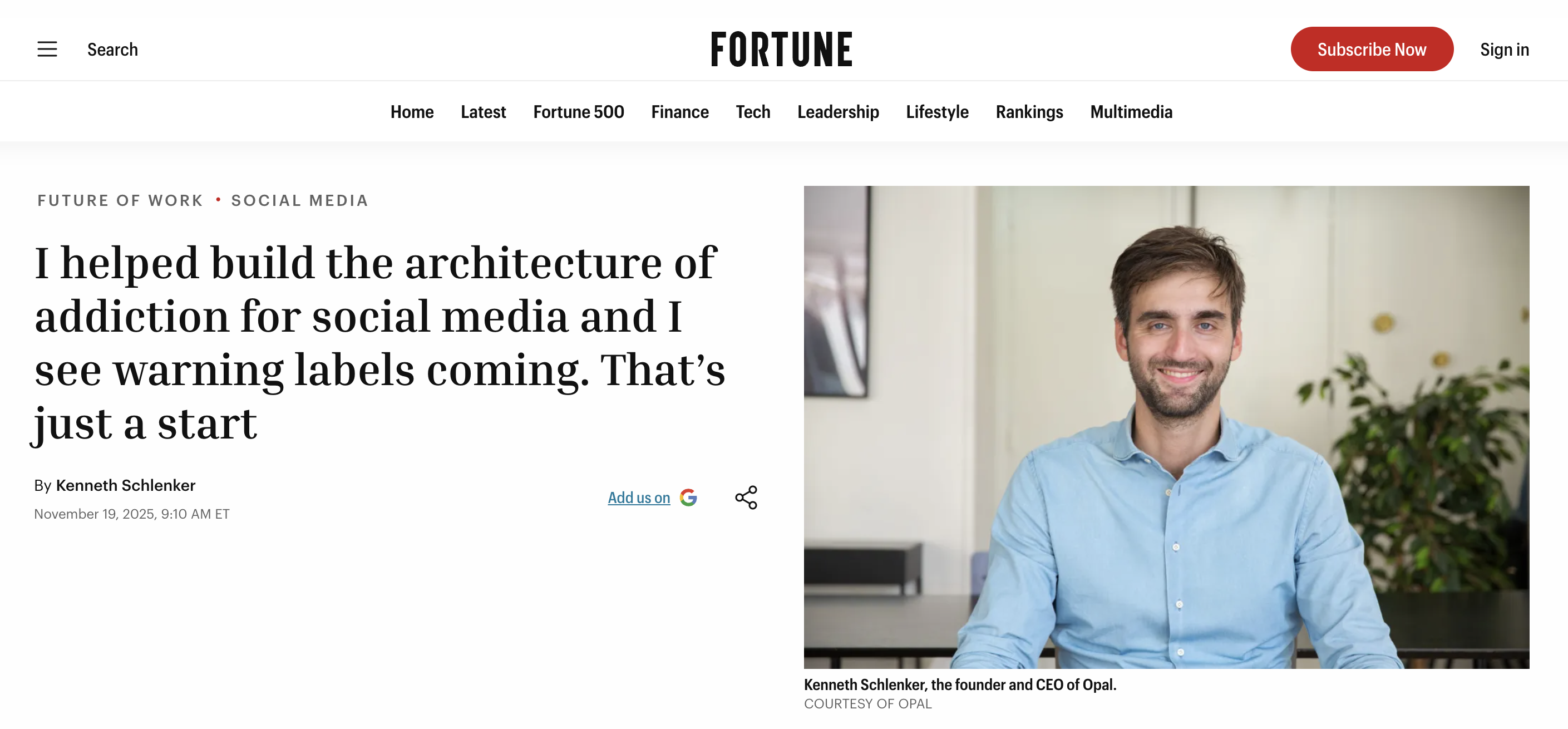
I spent my early twenties at Google learning how to hack human attention. Now I believe we can realign computers with humanity.
January 16, 2026
I spent my early twenties at Google learning how to hack human attention.
I analyzed data to understand exactly how to get people to click, scroll, and stay hooked to YouTube or Google Search. I was good at it — using behavioral science and machine learning to predict and influence what billions of people would do next.
At the time, it felt like important work. Cutting-edge. Impressive.
Now I see it for what it was: I was helping build the architecture of addiction that defines modern life.
But here's what I've come to believe: We can realign computers with humanity. And we must.
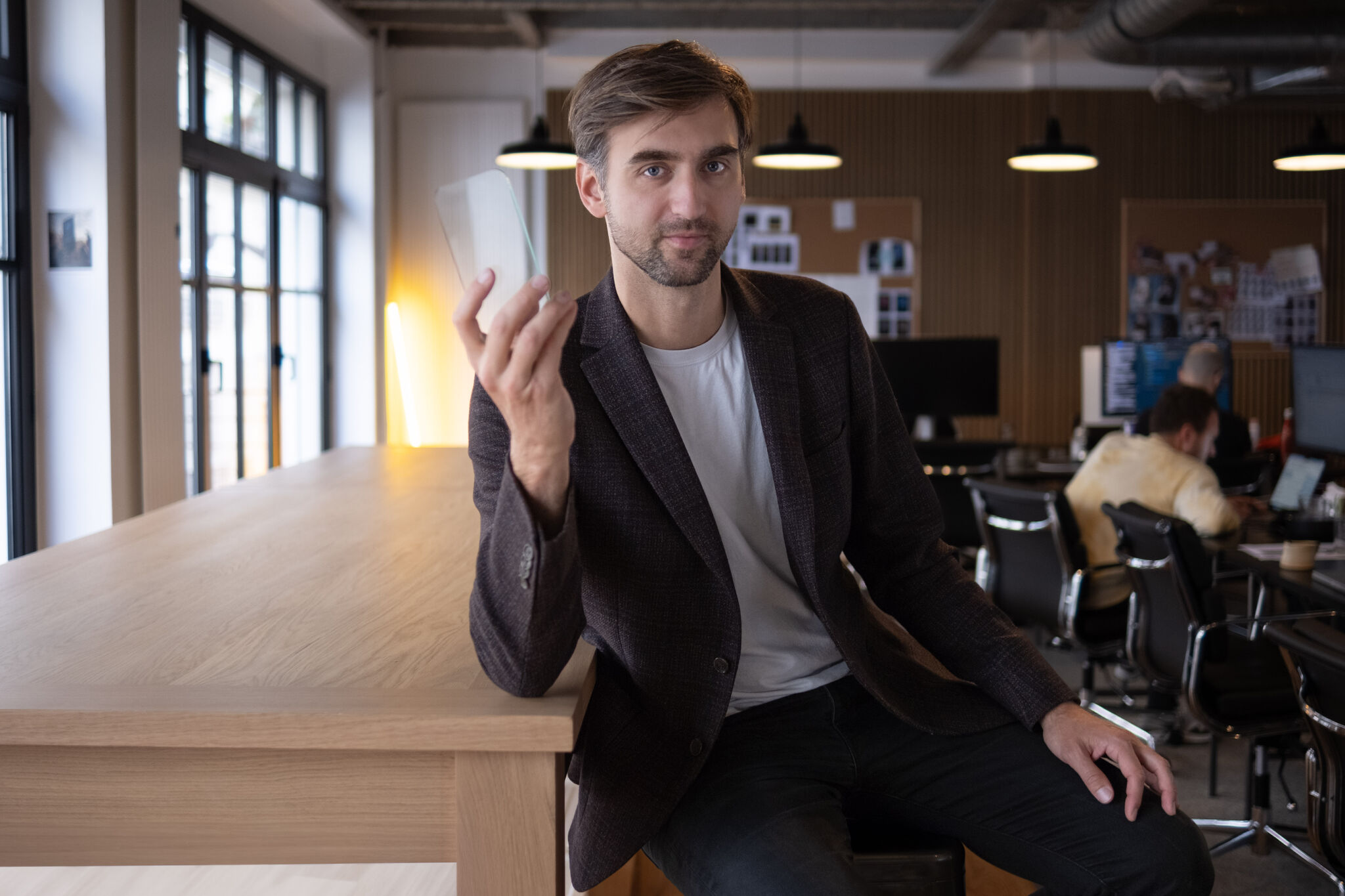
(📸 of me at Opal shot by Webster holding the methaphone by Eric Antonow)
Let's be honest about what happened.
Silicon Valley's brightest minds spent the last two decades figuring out how to capture and monetize human attention. The result is a digital environment that exploits every vulnerability in our psychology:
This wasn't a bug. It was the business model.
Social media platforms profit from addiction. Their quarterly earnings depend on keeping you scrolling longer, clicking more, and coming back compulsively.
And it worked. The average American now spends over 5 hours a day on their phone. The average worker wastes 2 hours of every workday on non-work screen time. The annual productivity cost to the U.S. economy exceeds $1 trillion.
But the human cost is even higher.
Despite everything, I'm optimistic. Here's why:
1. Awareness is exploding.
Five years ago, screen time was barely part of the cultural conversation. Today, reducing screen time is the #1 New Year's resolution. Over 100 million people have downloaded focus apps. The problem is now impossible to ignore.
2. The tools exist.
We don't have to wait for platforms to change (they won't voluntarily). We can build tools that put users back in control right now. That's what we're doing at Opal. Block the apps that hijack your attention. Create boundaries that stick. Reclaim your focus.
3. Policy is catching up.
California now requires mental health warning labels on social media. More states will follow. Just like we did with tobacco, we're starting to treat attention-hijacking technology as the public health issue it is.
4. Young people get it.
Seventy percent of Opal users are students. They've grown up with these platforms and they understand the cost better than anyone. They're not waiting for permission to take control.
Realigning technology with humanity doesn't mean rejecting technology. It means building and using technology that serves human flourishing rather than undermining it.
That looks like:
I've been working on this problem since 2008, when I wrote my first business plan for a focus app while still at Google. It took 11 years to build Opal.
In that time, I've learned that change happens on three levels simultaneously:
Individual: Take control of your own attention. Use tools. Set boundaries. Model healthy behavior for your kids.
Cultural: Keep talking about this. The "Scrolling Kills" billboard went viral because it said what everyone was thinking. The more we name the problem, the more power we have to solve it.
Systemic: Support policies that hold platforms accountable. Warning labels are just the beginning.
I helped build the attention economy. Now I'm committed to building its replacement.
We don't need to fear AI taking our jobs. We need to fear it taking our attention. Social media hooked us. AI is perfecting the addiction.
But a movement to reclaim our focus is gaining ground.
I'm convinced we can realign computers with humanity. The question is whether we'll do it fast enough.
Ready to take back your attention? Download Opal and join millions of people building healthier digital habits.
.png)
.svg)


.jpg)