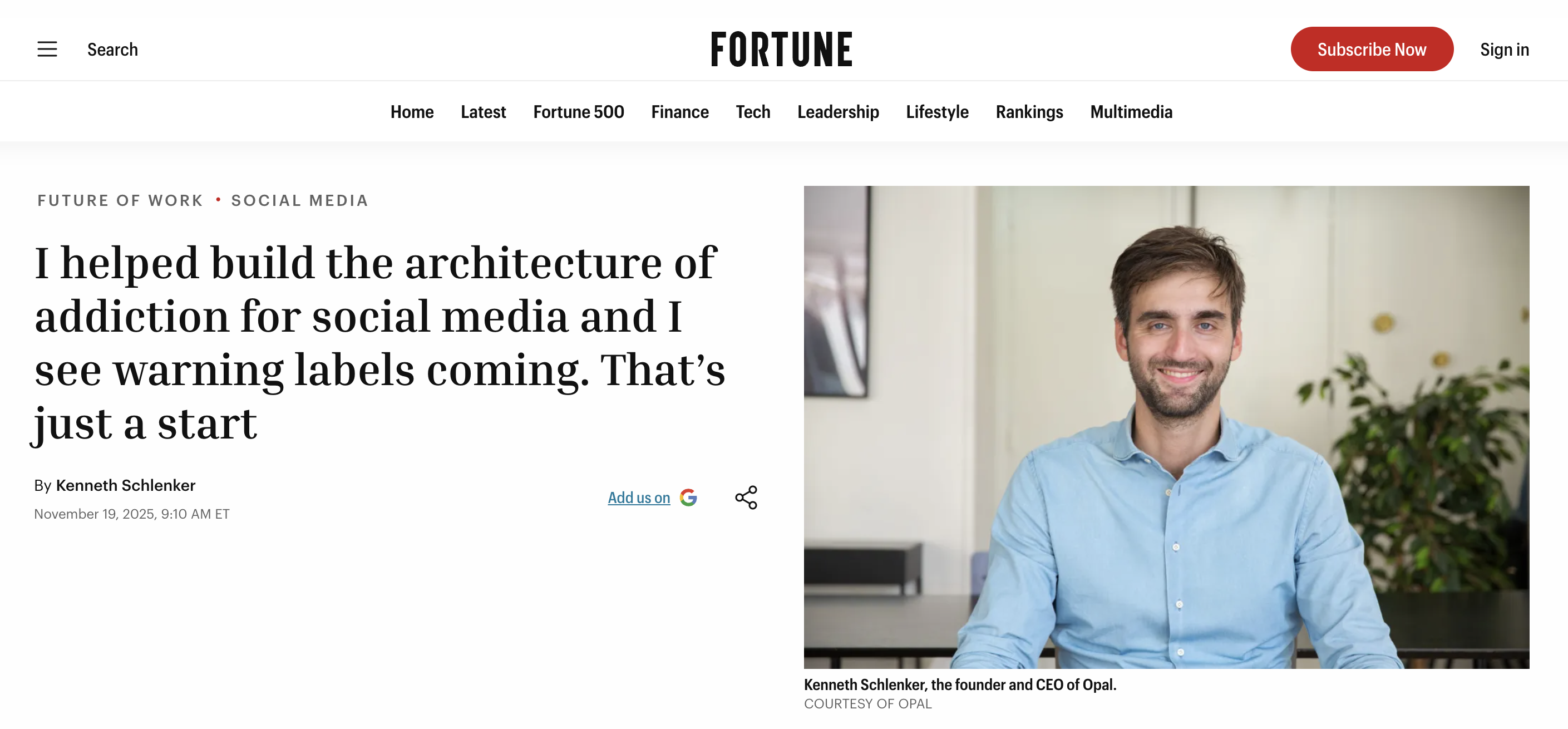
According to The Wall Street Journal, reducing screen time has become the #1 New Year's resolution. Here's why that matters.
January 16, 2026

Something shifted this year.
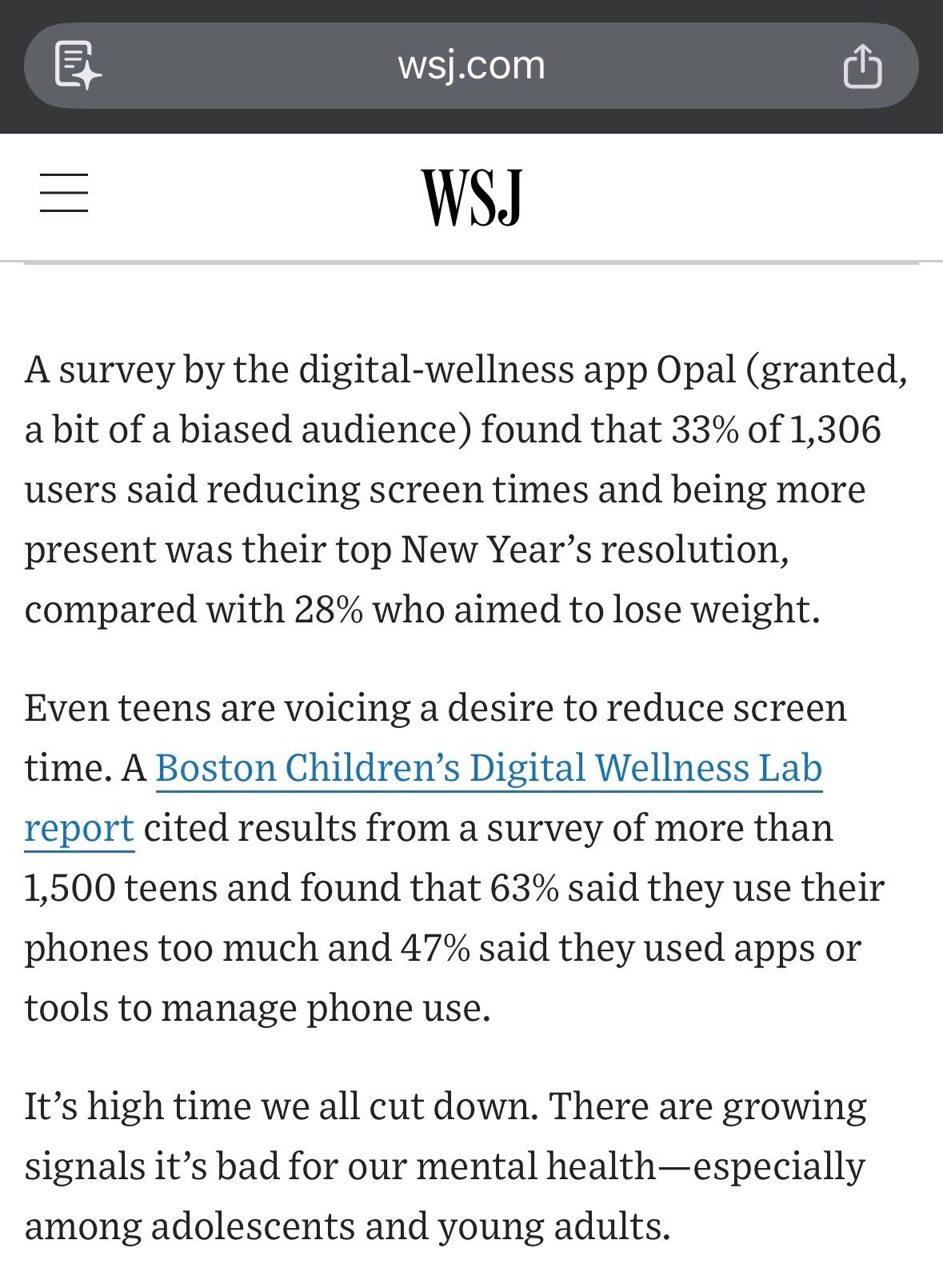
According to The Wall Street Journal, in a study conducted by Opal, reducing screen time has become the #1 New Year's resolution. Not losing weight. Not saving money. Not exercising more.
Screen time.
If you've been paying attention, this isn't surprising. But it is significant.
One of my favorite comments on this came from a friend who put it perfectly: "Reducing screen time is the new 'losing weight' — everyone knows they should do it, but the environment makes it incredibly difficult."
He's right. We've reached a tipping point.
For years, the conversation around screen time was framed as a "kids problem" or a "willpower problem." But people are waking up to something deeper: this isn't about discipline. It's about an environment designed to capture your attention at every turn.
When millions of people collectively decide that their relationship with their phone needs to change, it signals a cultural shift. We're moving from constant connectivity being a badge of honor to presence being the new status symbol.
Think about it:
People aren't just tired of their screen time. They're tired of feeling like their attention doesn't belong to them.
Here's the truth: wanting to reduce screen time and actually doing it are two very different things.
The apps on your phone were built by thousands of engineers whose job is to keep you scrolling. The notifications, the infinite feeds, the autoplay — none of it is accidental.
So if you've tried to cut back and failed, that's not a personal failure. That's the system working exactly as designed.
After years of building Opal and talking to millions of users, here's what I've learned about people who successfully reduce their screen time:
The fact that screen time is now the #1 resolution tells me something important: people are ready for change. They're recognizing that their attention is valuable, and they want to take it back.
That's not a trend. That's a movement.
And if you're one of the millions of people who made this resolution this year, know that you're not alone. The first step is awareness. The second is action.
You've already taken the first step.
Want to take control of your screen time? Download Opal and join over 4 million people building healthier digital habits.
.png)
.svg)


.jpg)