Last month, a billboard went up on Canal Street in NYC. Two words: Scrolling Kills. Here's what it means.
January 16, 2026
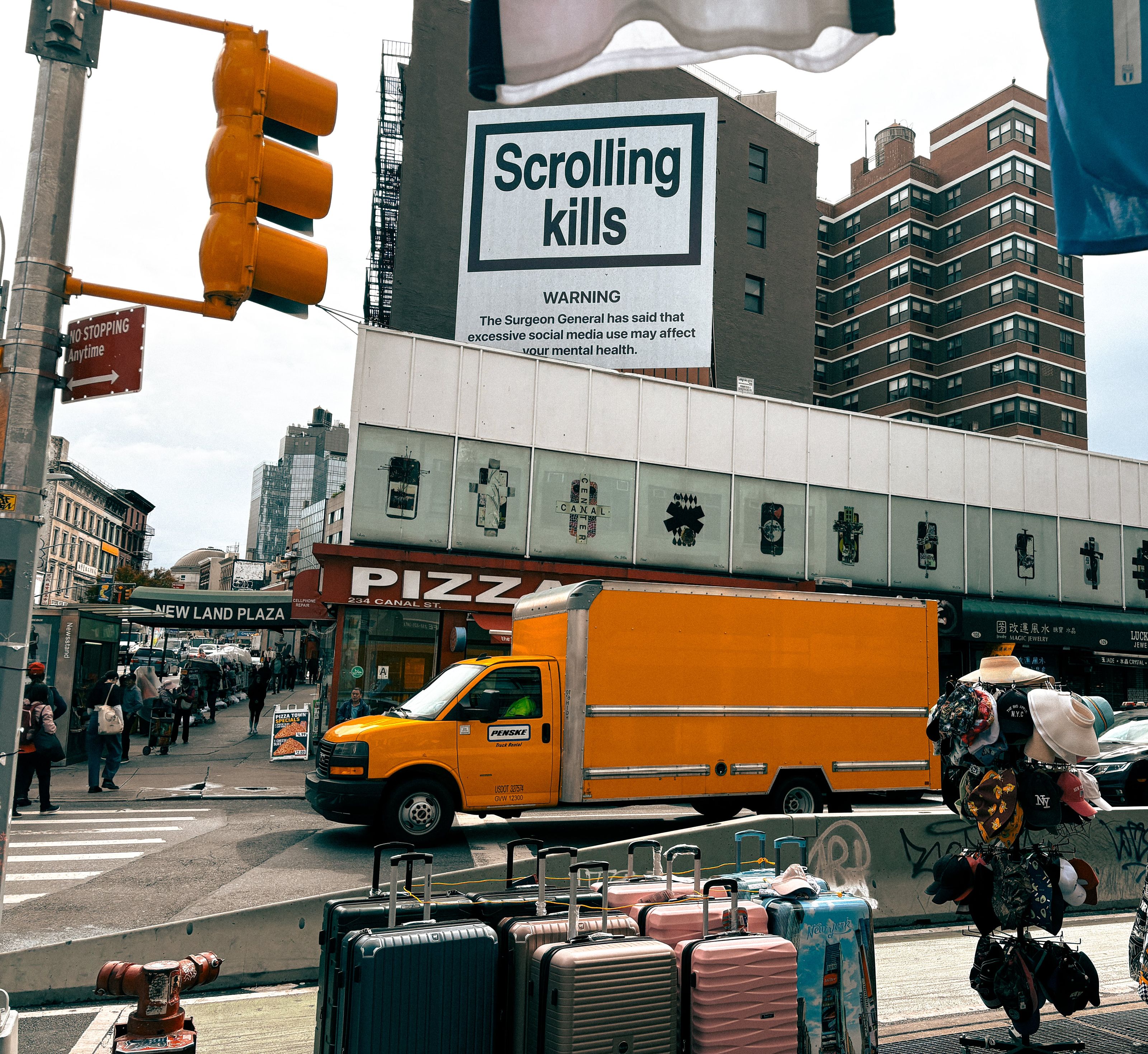
Last month, a billboard went up on Canal Street in NYC.
Two words: Scrolling Kills.
Within hours, it went viral. Not because of clever marketing. Because it named what millions of people feel every day.
Let me be clear: I'm not talking about physical death (though distracted driving is a real problem).
I'm talking about something more insidious. Scrolling kills:
By the time you're 40, you will have spent seven full years staring at a screen. Not working. Not creating. Just... scrolling.
That's not living. That's existing in the margins of your own life.
The billboard struck a nerve because people already know this. They feel it every night when they put down their phone and wonder where the evening went. They feel it when their kid asks them a question and they realize they weren't listening.
Over 100 million people downloaded focus apps in the past year. That's not a trend — that's a cry for help.
Seventy percent of Opal users are students. Young people who've done the math on what infinite scroll costs them. They're not waiting for adults to figure it out. They're taking action now.
Here's something I don't talk about often: I helped build this.
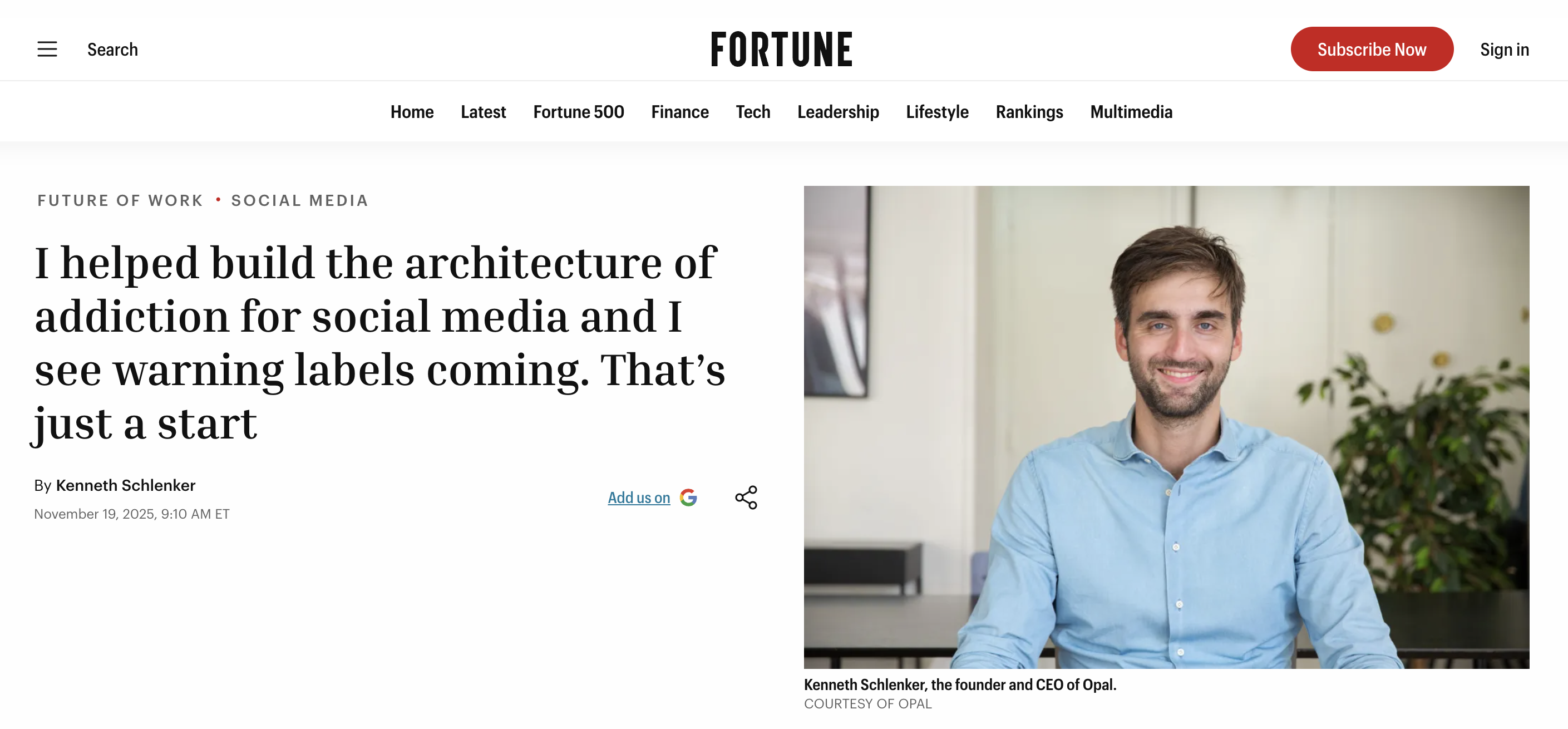
In my early twenties, I worked at Google. My job was to analyze data and understand how to make people click, scroll, and stay hooked. I was good at it. I used behavioral science and machine learning to predict and influence what billions of people would do next.
I didn't realize then that I was helping construct the architecture of addiction that now defines modern life.
Every infinite scroll. Every autoplay video. Every notification designed to trigger a dopamine hit. None of it is accidental. It's engineered.
And the engineering worked too well.
In 2008, while still at Google, I wrote the first business plan for a focus app. I knew even then that what we were building wasn't designed for human wellbeing.
It took me 11 years to build Opal.
Last year, California became the second state to require mental health warning labels on social media platforms. Starting January 1, 2027, platforms will need to display warnings about social media's "profound risk of harm to mental health and well-being of children and adolescents."
Warning labels are necessary. But they're not sufficient.
We need systemic change. We need to realign technology with human wellbeing — not engagement metrics and ad revenue.
That billboard on Canal Street? It wasn't just advertising. It was a statement.
We're not going to fix this by hoping people develop more willpower. The system is designed to overwhelm willpower.
We fix this by:
The distraction economy has been stealing our mental health, our productivity, and our ability to be present for what matters.
It's time to take it back.
Your attention is your most valuable asset. Protect it like you'd protect your health. Download Opal and join the movement.
.png)
.svg)


.jpg)